The best microphones for podcasting range from simple USB setups to XLR models built for a growing studio. Choose by your recording setup, whether you need a stand included, and how much hands-on control you want.
Quick Top Products
MAONO PD300X
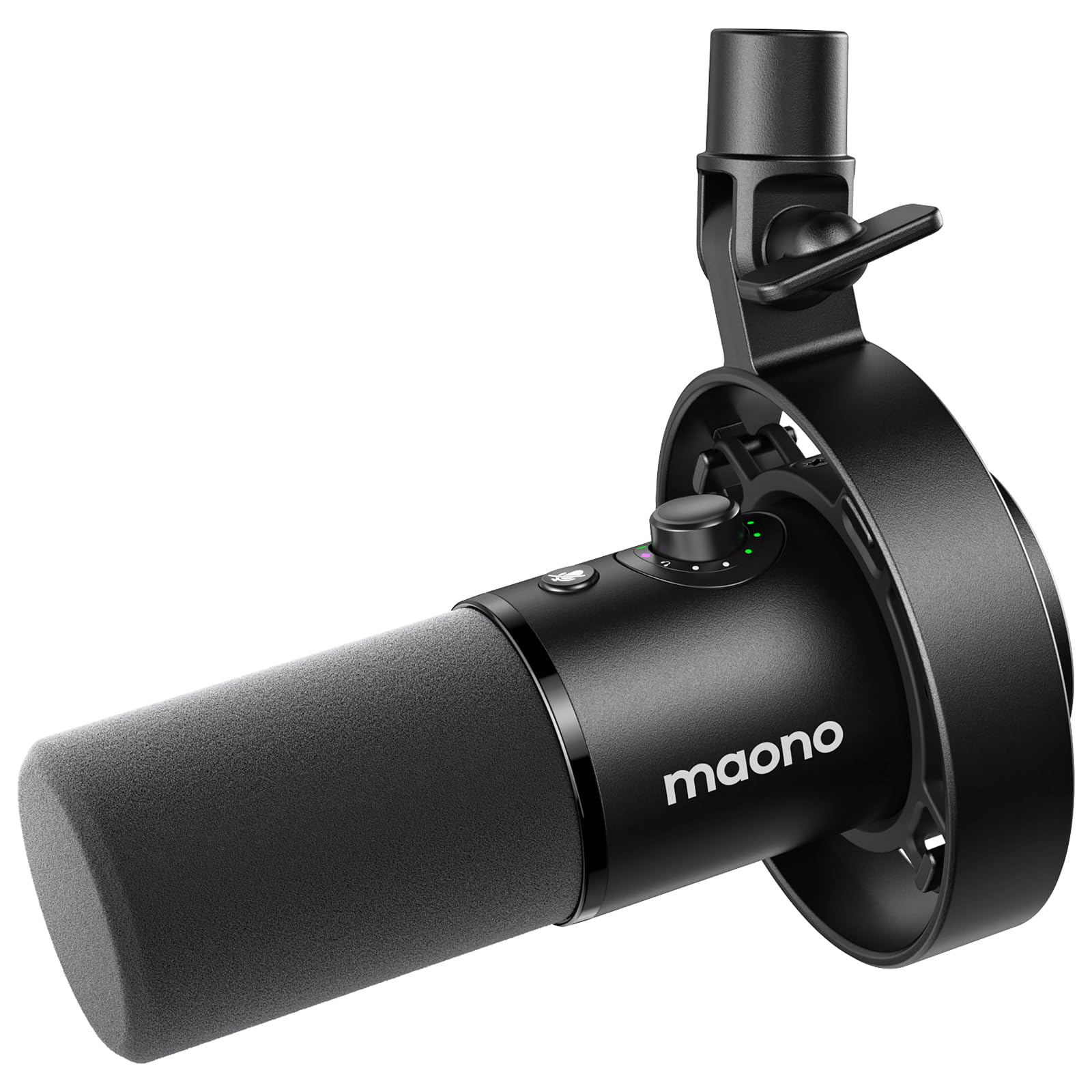
- Offers USB and XLR connections for computer and mixer workflows.
- MAONO Link offers EQ and audio processing adjustments.
- A smart knob combines gain, headphone volume and monitoring.
Best For: Podcasters who want USB simplicity now and XLR connectivity for a later studio setup.

MAONO PD400X
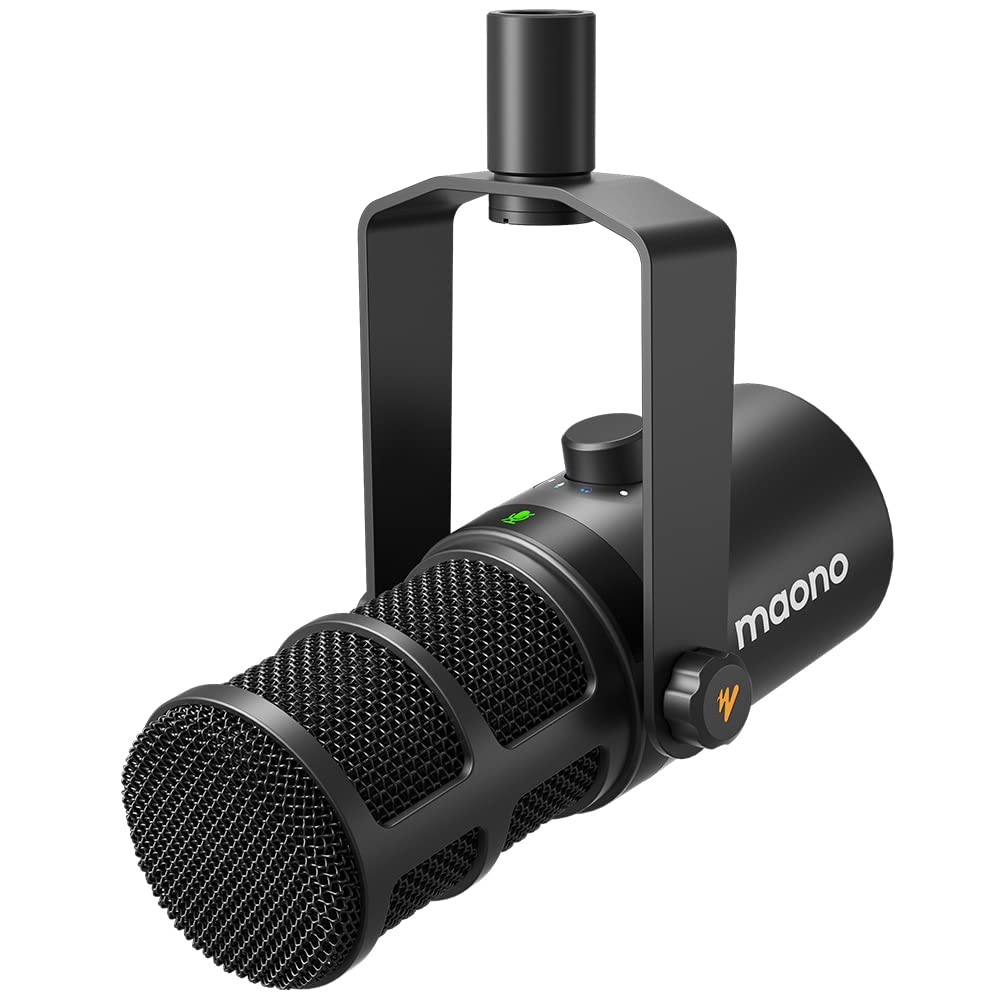
- USB and XLR outputs support computer and audio-interface workflows.
- The app includes EQ, limiter and compressor controls.
- Tap-to-mute includes an LED status indicator.
Best For: Podcast hosts who want app-based voice adjustments alongside direct USB and XLR connections.
Samson Q2U
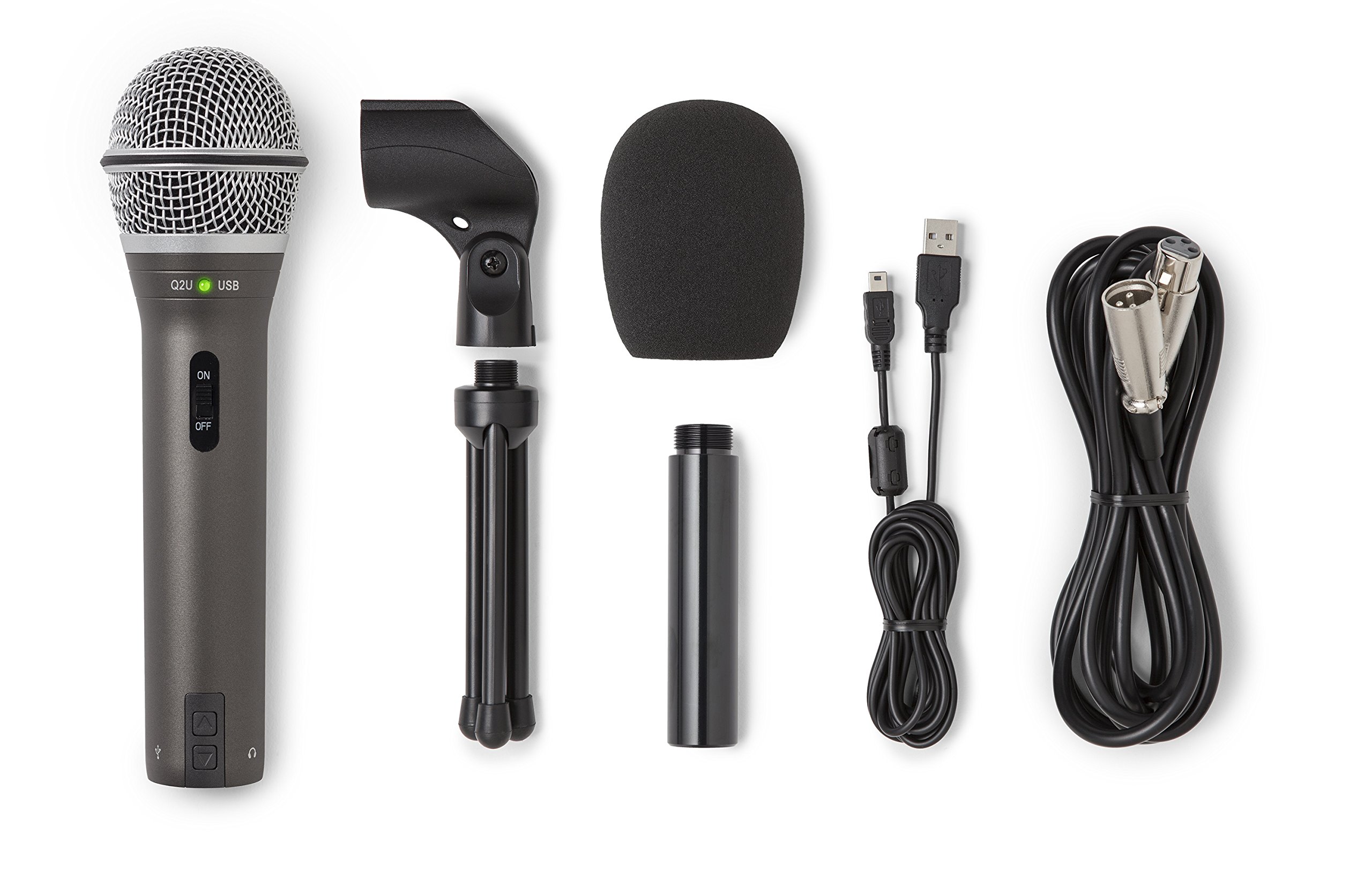
- Uses both USB-C and XLR connections.
- Includes a desktop tripod stand and extension.
- The pack includes a windscreen and both connection cables.
Best For: New podcasters who want a handheld mic and both computer and XLR connection options.
FIFINE AmpliTank K688
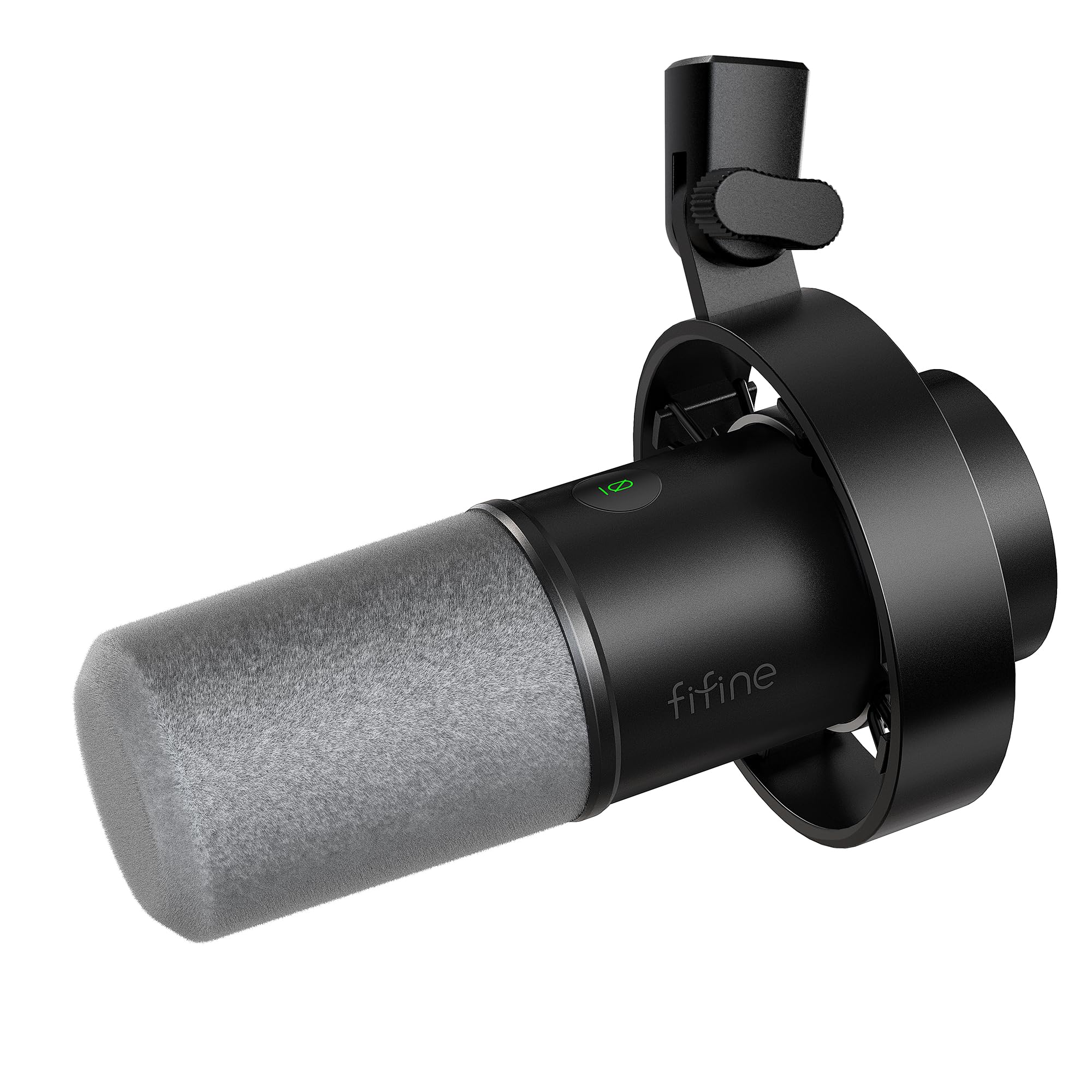
- Offers USB and XLR connections.
- USB mode provides mute, gain and headphone monitoring controls.
- Includes a mic with shock mount, a USB-C to USB-A cable, a thread adapter and a user's manual.
Best For: Podcasters who want USB monitoring and controls, with a separate interface available for XLR use.
FIFINE AmpliTank K688 Pink
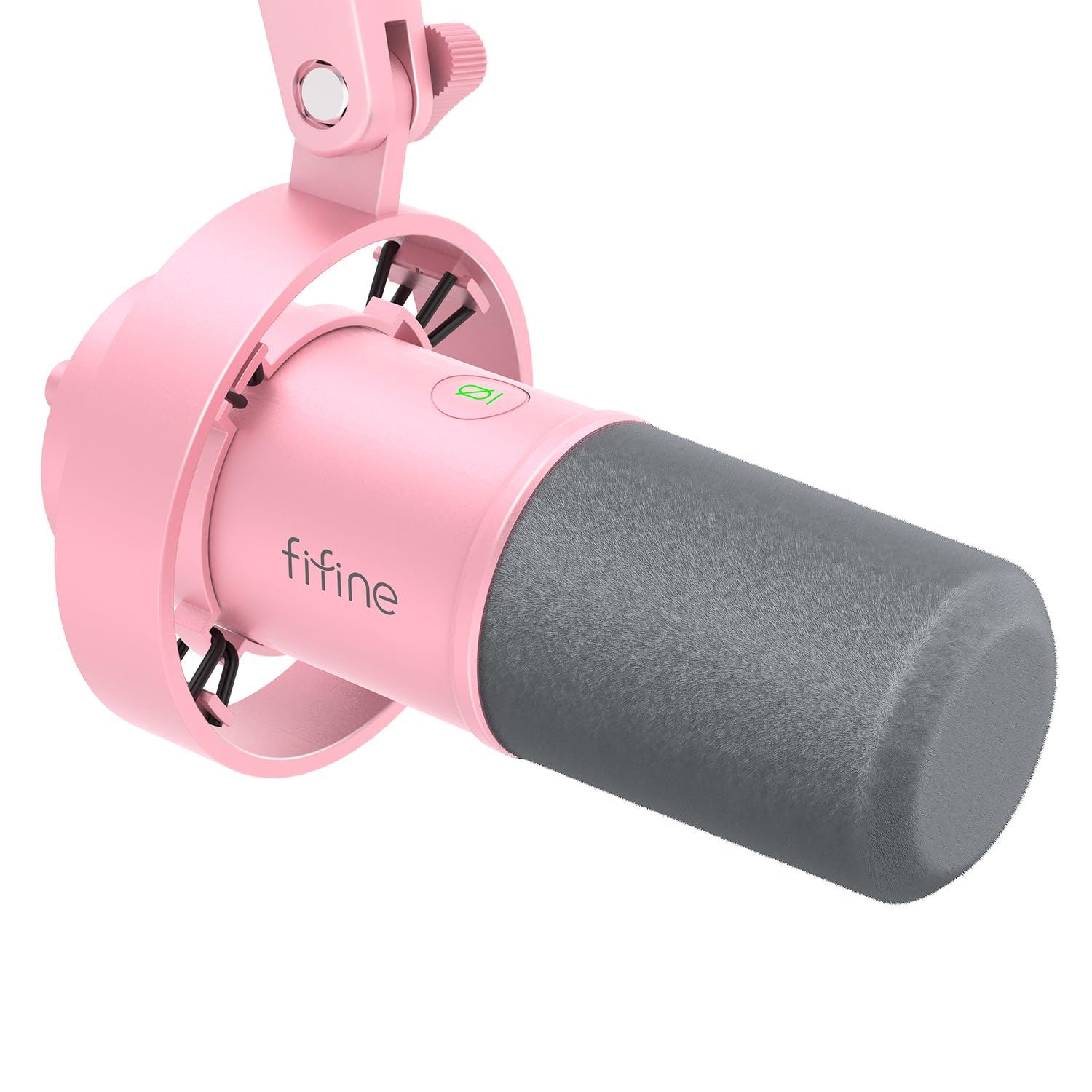
- Supports USB and XLR connection options.
- USB mode has mute, volume and headphone monitoring controls.
- Includes a dynamic microphone with shock mount, a USB cable, a thread adapter and a user's manual.
Best For: A close-speaking podcaster who wants USB monitoring and a bundled shock mount but has a separate mic stand.
FIFINE AmpliTank K688 White
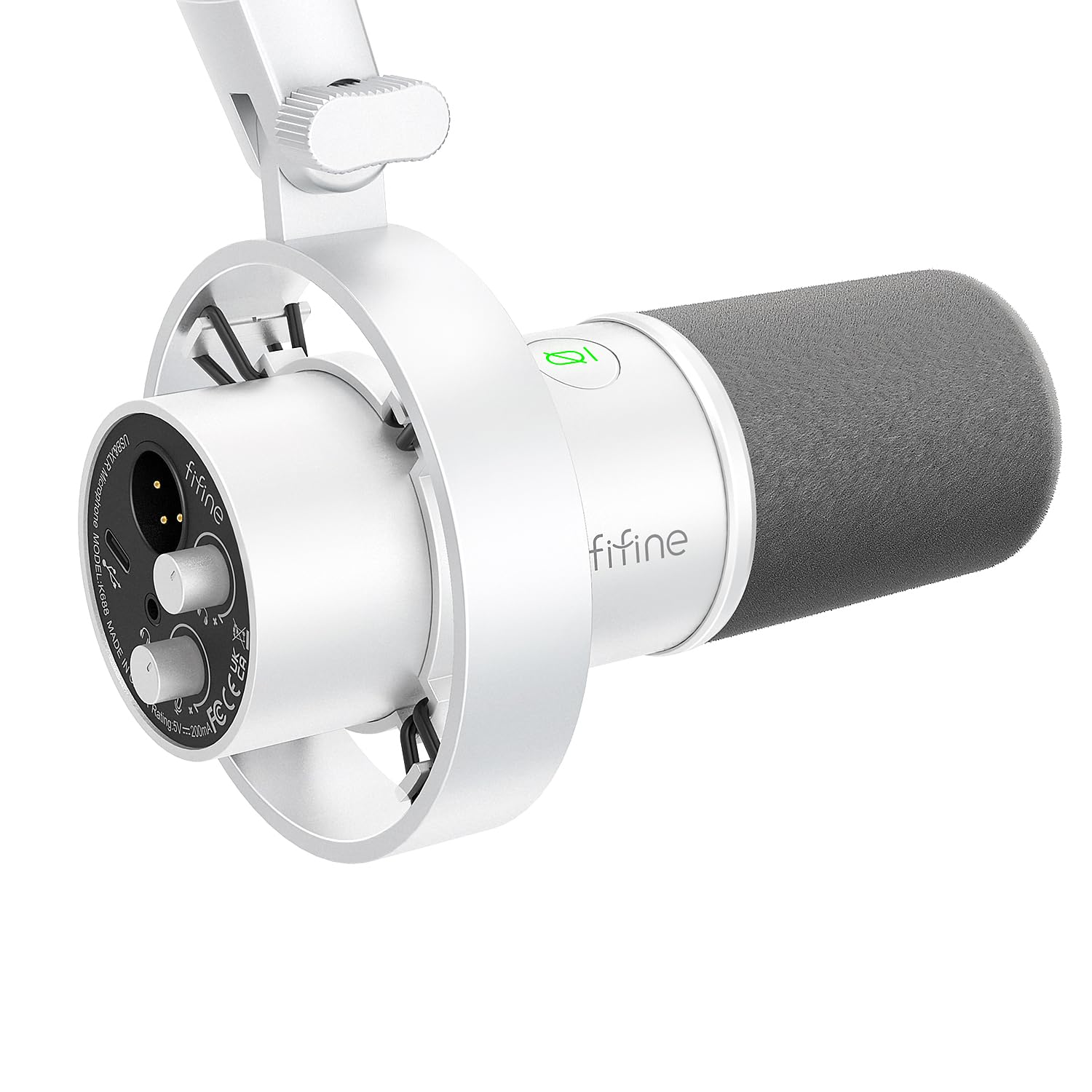
- Provides USB and XLR interfaces.
- USB mode includes mute, volume and headphone monitoring controls.
- Includes a shock mount, USB cable and thread adapter.
Best For: A podcaster who wants the K688 feature set in white and already has a stand and XLR cable.
FIFINE AmpliGame AM8 White
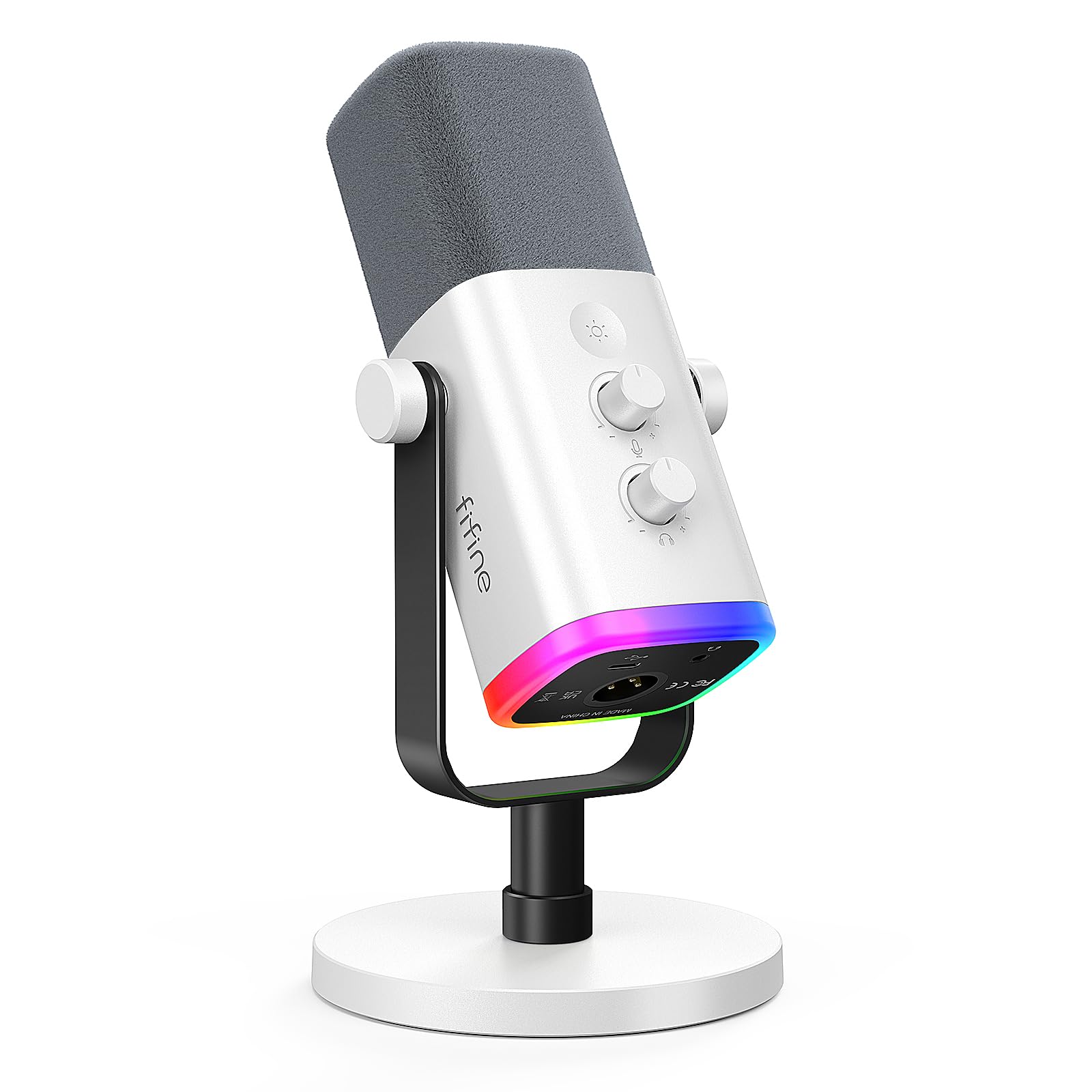
- Supports USB and XLR connections.
- USB controls include mute, gain and headphone volume.
- RGB lighting can be changed or switched off by tapping its button.
Best For: Streamers and podcasters who want a desktop dynamic mic with quick controls and RGB lighting.
FIFINE AmpliGame AM8T
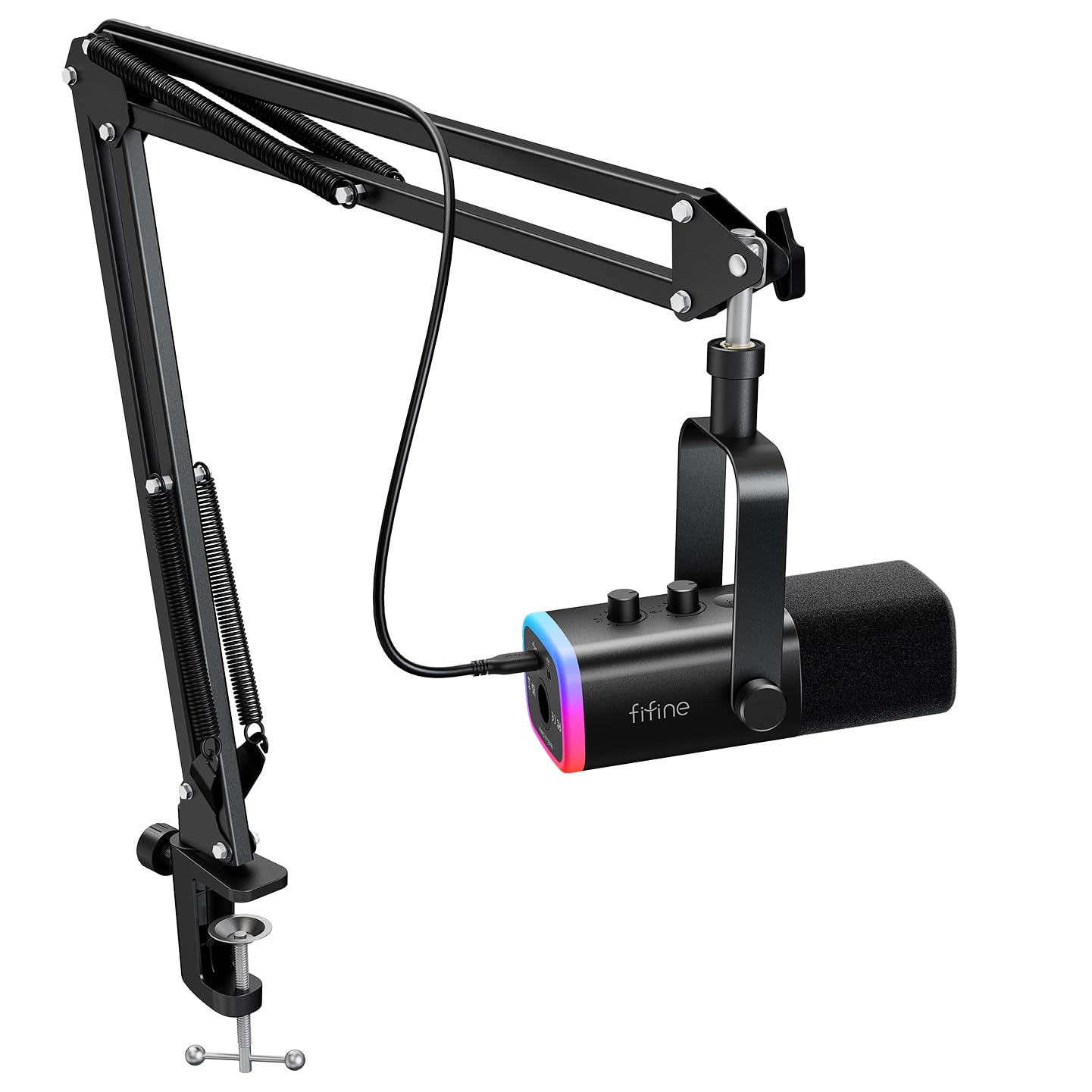
- Includes a dynamic microphone and boom arm stand.
- Supports USB and XLR connection.
- Includes a mute button and gain knob for control, plus a headphone jack for real-time monitoring and headphone volume control.
Best For: Podcasters who want a dynamic mic, boom arm and both USB and XLR options in a kit.
MAONO DM40
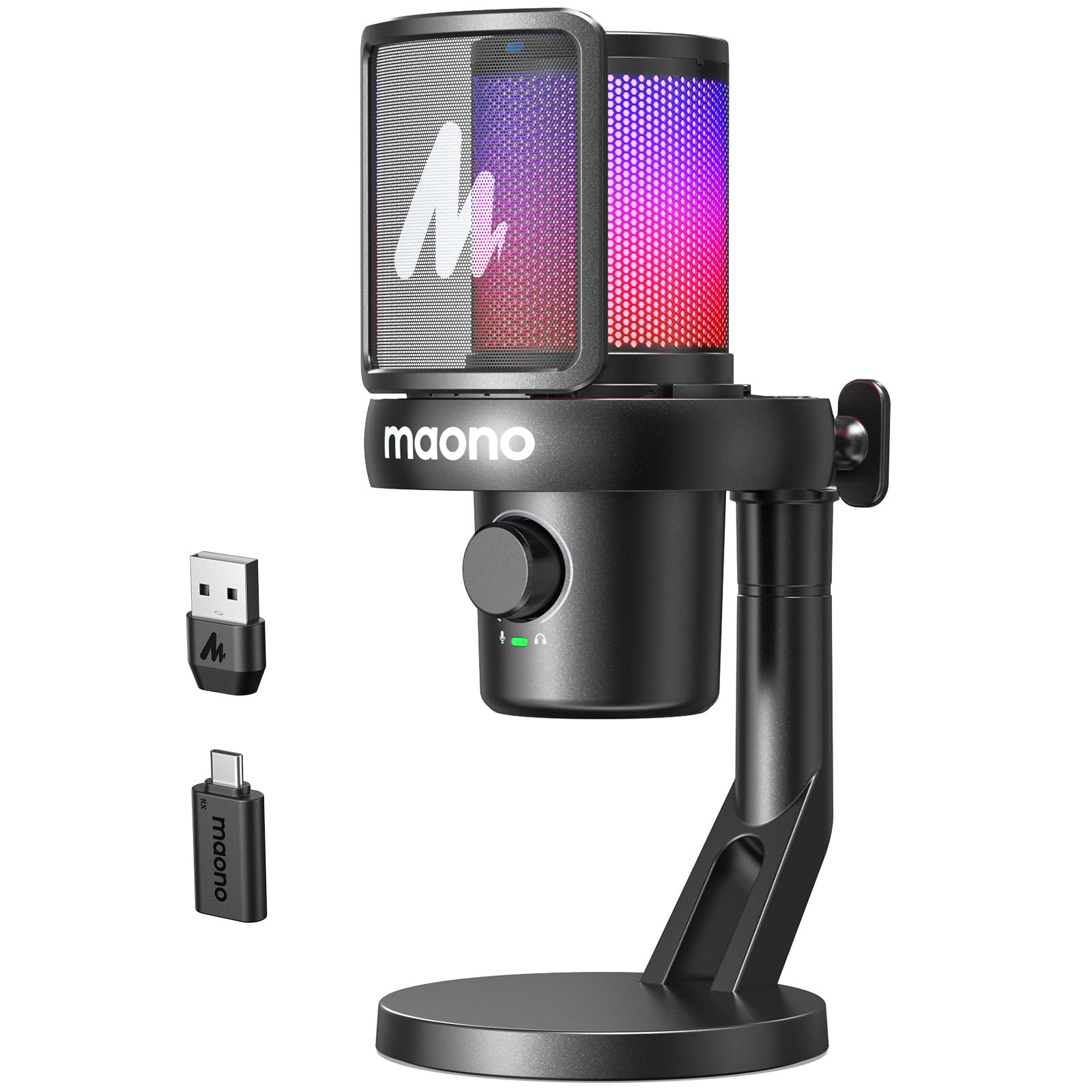
- Supports wireless and wired connections.
- Offers up to 40 hours of continuous use.
- Three noise cancellation levels can be adjusted on the mic or in the app.
Best For: Podcasters who value a wireless desktop setup and software scene controls.
FIFINE T669
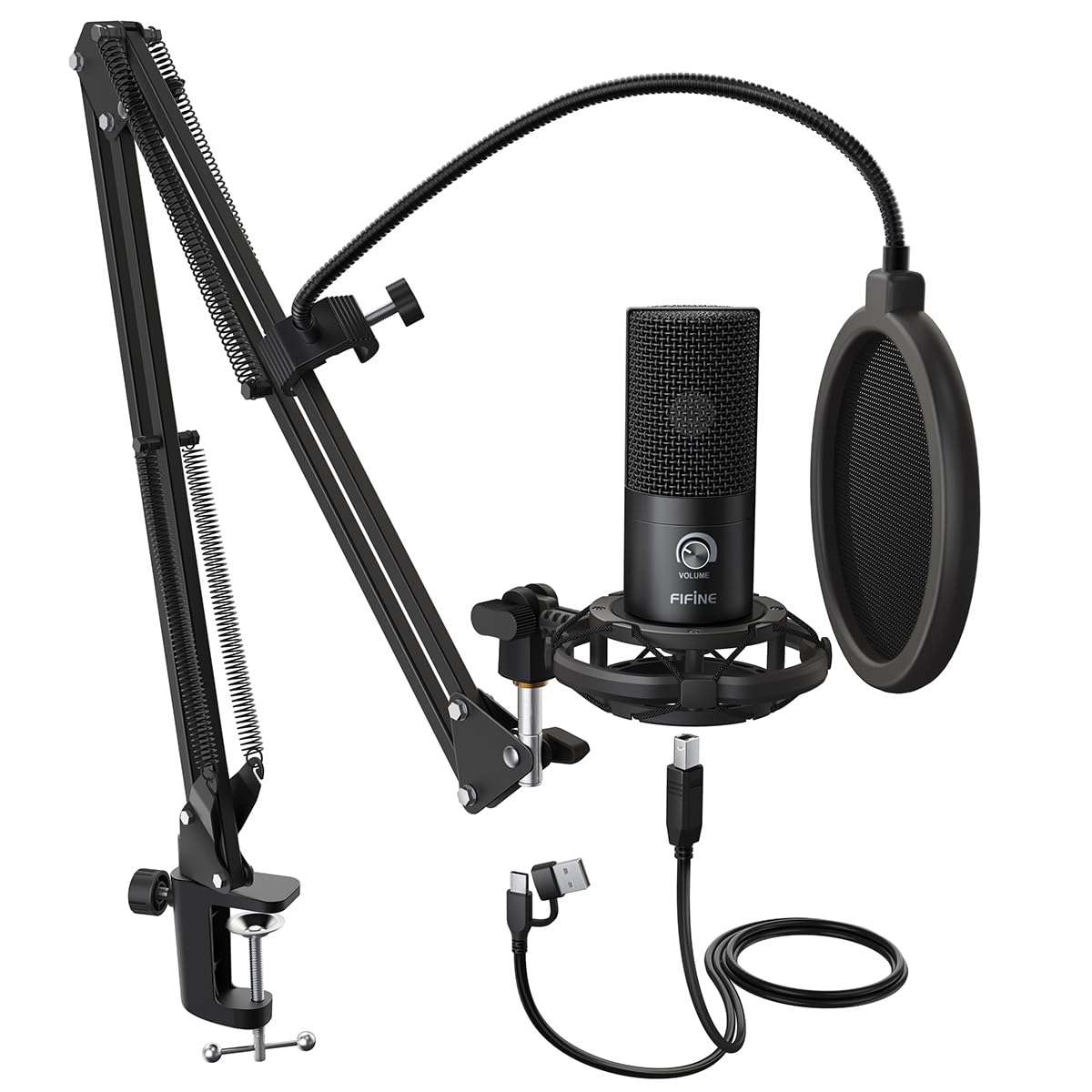
- Connects to a PC or laptop by USB without additional drivers.
- The cardioid capsule focuses on sound from the front.
- Includes a boom arm, shock mount and double pop filter.
Best For: New podcasters who want a USB condenser mic with an included adjustable arm and pop filters.
Flexible USB/XLR Recording Controls
MAONO Dynamic Microphone-XLR USB Podcast Recording Mic: for Vocal Recording, Content Creation, Home Studio, Voiceover, with 192kHz/24bit, Noise Reduction, Mic Gain, Monitoring, Mute (PD300X)
The MAONO PD300X combines USB and XLR connections with software controls for shaping a podcast voice. Its MAONO Link app includes EQ, limiter, compressor and high-pass filter adjustments, while four preset modes make it easier to switch between recording situations.
A smart knob handles gain, headphone volume and monitoring, and the mute button also activates noise reduction with a long press. The dynamic microphone includes a noise reduction mode and a foam filter for plosives.
It suits a host who wants room to adjust sound, though the record does not specify which stand or cables come in the box.
Best For: Podcasters who want USB simplicity now and XLR connectivity for a later studio setup.
| Pros | Cons |
|---|---|
|
|
Choose the PD300X if you want to tune a USB recording in software and keep an XLR path available for a mixer later. Its four presets and noise reduction control suit hosts who will adjust settings between recording and streaming.
The supplied details do not identify the included cables or stand, so check those before planning a complete desk setup. This is a more control-focused choice than a basic plug-and-play mic.
Software-Tunable Dynamic Mic
MAONO Dynamic Microphone, USB/XLR Podcast PC Microphone with Software, EQ,Tap-to-Mute, Headphone Jack, Gain Knob & Volume Control, Studio Mic for Broadcast, Recording, Streaming & Gaming (PD400X)
The MAONO PD400X is a dynamic microphone with USB and XLR outputs, making it usable with a computer or compatible audio gear. In USB mode, the MAONO Link app offers Standard and Advanced modes, with EQ, limiter and compressor adjustments among its controls.
A digital knob adjusts mic gain, headphone volume and monitor mix, while tap-to-mute has an LED indicator. Its cardioid pattern is intended to focus on the speaker in imperfect rooms.
The product is presented as a microphone for studio or home recording, podcasting and live streaming. Its stand and included cable details are not specified here.
Best For: Podcast hosts who want app-based voice adjustments alongside direct USB and XLR connections.
| Pros | Cons |
|---|---|
|
|
Pick the PD400X if you want software control without giving up a conventional XLR connection. Its tap mute and multi-purpose dial are useful when a host needs to make quick changes while recording.
The app’s more extensive adjustments require USB, so consider whether software tuning or an XLR-first setup matters more to your workflow. Confirm the included mounting hardware and cables before buying, since those details are not provided.
Handheld USB-C and XLR Starter Pack
Samson Q2U Dynamic USB-C/XLR Microphone
The Samson Q2U is a handheld dynamic microphone with USB-C and XLR connections. It plugs directly into a computer with a USB-C interface, or can connect through XLR when paired with suitable audio equipment.
The pack includes a desktop tripod stand, tripod extension, mic clip, windscreen, USB-C cable and XLR cable, so it covers several basic setup needs in one purchase. Its straightforward format suits a solo host who wants to begin recording at a desk and keep a path toward a mixer.
The record does not give software controls or a polar pattern, so check whether those are priorities.
Best For: New podcasters who want a handheld mic and both computer and XLR connection options.
| Pros | Cons |
|---|---|
|
|
The Q2U fits a first podcast setup where the host wants a mic, desk stand and cables together. USB-C offers a direct computer route, while XLR leaves room to use compatible studio equipment.
Its pack contents are more explicit than those of several standalone options here, but the details do not establish onboard gain, mute or monitoring controls. Check your computer ports and whether you prefer a handheld mic position before choosing it.
USB/XLR Dynamic Mic With Monitoring
FIFINE Dynamic Microphone, XLR/USB Podcast Recording PC Microphone for Vocal Voice-Over Streaming, Studio Metal Mic with Mute, Headphone Jack, Monitoring Volume Control, Windscreen-Amplitank K688
The FIFINE K688 is a dynamic microphone that connects by USB or XLR. Over USB, it has a tap-to-mute control, gain knob, headphone jack and headphone volume control for monitoring.
Its cardioid pattern and included windscreen and shock mount are intended to help manage room and desk noise during close vocal recording. The supplied USB cable is 8.2ft, while the XLR cable, boom arm and mic stand are not included.
That makes it a reasonable fit for a host who already has mounting hardware or plans to add it, and who wants the option to move from USB to an XLR chain.
Best For: Podcasters who want USB monitoring and controls, with a separate interface available for XLR use.
| Pros | Cons |
|---|---|
|
|
Choose this K688 if you want hands-on USB controls and already have a stand or are comfortable adding one. Its USB and XLR connections support use with a computer or with a mixer or sound card.
The mute, gain, and monitoring controls are available only over USB, so plan to use external gear for XLR recording. Check mounting hardware and an XLR cable separately; neither is included.
Close-Talk Mic With Shock Mount
FIFINE XLR/USB Dynamic Microphone, Studio XLR Vocal Podcast Microphone for Recording, USB Streaming Mic with Mute Button, Gain Knob, Headphones Monitoring for Voice-Over, Video-Amplitank K688 Pink
This pink FIFINE AmpliTank K688 has a dynamic capsule, USB and XLR connectivity, and a cardioid pickup pattern. On USB, its controls include mute, volume and a headphone monitoring jack with a separate monitoring volume knob.
The microphone includes a shock mount, windscreen, USB cable and thread adapter. It does not include an XLR cable, boom arm or mic stand, so it works best for someone who already has a way to position it or has hardware in mind.
The product recommends close recording to help block unwanted room sound. Treat XLR use as a separate setup that needs a suitable cable and interface.
Best For: A close-speaking podcaster who wants USB monitoring and a bundled shock mount but has a separate mic stand.
| Pros | Cons |
|---|---|
|
|
This K688 color option fits someone who likes its included shock mount and USB controls and can supply a stand separately. Its USB path supports direct computer connection, while XLR remains an option with extra gear.
Since it shares the K688 model with other offers, compare the color and current offer details rather than treating it as a different microphone design. Confirm that your recording position can keep the mic close, as the supplied guidance emphasizes close use.
White K688 With USB Monitoring
FIFINE Studio XLR Dynamic Microphone, USB PC Podcast Microphone for Streaming Recording, XLR/USB Vocal Mic with Tap-to-Mute, Gain Knob, Headphones Monitoring-Amplitank K688 White
The white FIFINE AmpliTank K688 combines a dynamic microphone with USB and XLR connections. USB recording provides a mute button, volume control, headphone jack and monitoring knob; these function keys are available only over USB.
Its cardioid pattern, windscreen and shock mount are aimed at keeping attention on a close vocal recording while reducing plosives and desk vibration. A USB-C to USB cable and thread adapter are included, but the XLR cable, boom arm and mic stand are not.
This is a color-specific offer of the K688 model, so focus on its included accessories and finish rather than expecting a distinct model capability.
Best For: A podcaster who wants the K688 feature set in white and already has a stand and XLR cable.
| Pros | Cons |
|---|---|
|
|
This white offer is suited to a host who wants the K688’s USB monitoring controls and has desk mounting hardware ready. XLR connectivity offers a second route, but requires a separately supplied cable and interface.
The details match the other K688 color offer, so choose based on the finish and offer contents. Note that mute and monitoring controls are USB-only; an XLR workflow needs controls elsewhere in the chain.
RGB Dynamic Mic for USB or XLR
FIFINE XLR/USB Gaming Microphone for Streaming Podcasting, PC Computer RGB Mic, with Gain Knob, Mute Button, Monitoring Jack, Gamer Mic for Recording Video Creation-AmpliGame AM8 White
The white FIFINE AmpliGame AM8 is a dynamic microphone with USB and XLR connectivity. In USB mode, it provides a tap-to-mute button, gain knob, headphone jack and headphone volume control, along with adjustable RGB lighting.
XLR offers a connection to a mixer or sound card, while the product recommends positioning its end-addressed capsule toward the audio source and within close range. Its compact desktop design is aimed at streaming and podcasting as well as other voice work.
The details do not identify included cable or stand contents, so verify the setup pieces you need before purchasing.
Best For: Streamers and podcasters who want a desktop dynamic mic with quick controls and RGB lighting.
| Pros | Cons |
|---|---|
|
|
Choose the AM8 if you want a dynamic desktop mic with quick USB controls and a white RGB-accented setup. It can also connect by XLR, though several convenience functions are limited to USB, so an XLR recording chain needs its own control and monitoring plan.
The available details do not confirm which cables or stand come with this offer. Check those contents and confirm the microphone can be aimed toward your speaking position.
Dynamic Mic Kit With Boom Arm
FIFINE XLR/USB Gaming Microphone Set, Dynamic PC Mic for Streaming Podcasting, Computer RGB Mic Kit with Boom Arm Stand, Mute Button, Headphones Jack, for Recording Vocal Voice-Over-AmpliGame AM8T
The FIFINE AmpliGame AM8T pairs a dynamic USB/XLR microphone with a boom arm. USB is plug-and-play for a computer, while XLR can connect to a mixer or sound card.
The mic includes a gain knob, mute button, headphone jack and monitoring volume control, plus RGB lighting that can be changed from the mic. A cardioid pattern and included windscreen suit close voice work.
The kit includes an 8.2ft USB cable, but it does not include an XLR cable; the desk clamp fits desks less than 2 inches thick. This package suits a host who wants to position the mic off the desk and can check clamp fit first.
Best For: Podcasters who want a dynamic mic, boom arm and both USB and XLR options in a kit.
| Pros | Cons |
|---|---|
|
|
Pick the AM8T if a boom arm is useful and you want both connection types in a single kit. The arm helps free desk space, while the USB path includes on-mic controls and monitoring.
For XLR use, budget for a separate cable and compatible interface or mixer. Check desk thickness before buying because the clamp has a stated fit limit; this is a more complete mounting package than standalone mics in the roundup.
Wireless Setup With Scene Presets
MAONO Wireless Microphone for PC,Gaming Streaming Condenser Mic with Software AI Voice Change,3-Level Noise Cancellation,Custom EQ,Gain Control USB Mic for Podcast Recording (DM40-Black)
The MAONO DM40 is a wireless USB microphone for computer recording, with a USB-C dongle and a cable for wired use. It offers up to 40 hours of continuous use, three noise cancellation levels and software controls for EQ, gain, mute, monitoring and scene presets.
Its AI voice changing and RGB lighting are additional customization features, particularly relevant to streamers and gaming sessions. For podcasting, the main practical distinction is the option to record without a cable running from the microphone to the computer.
The record does not specify its polar pattern or included stand, so check those details if placement and room pickup are important.
Best For: Podcasters who value a wireless desktop setup and software scene controls.
| Pros | Cons |
|---|---|
|
|
Consider the DM40 if you want a wireless setup or expect to move around while recording. It also supports wired use and gives access to noise cancellation, scene presets and EQ in the software.
Those features add flexibility, though the supplied details do not identify pickup pattern or stand contents, both useful considerations for a podcast desk. Check the computer connection and charging expectations for the way you intend to record.
USB Mic Kit With Adjustable Boom Arm
FIFINE Studio Condenser USB Microphone Computer PC Microphone Kit with Adjustable Boom Arm Stand Shock Mount for Instruments Voice Overs Recording Podcasting YouTube Vocal Gaming Streaming-T669
The FIFINE T669 is a USB condenser microphone kit built around a boom arm and desktop recording. It connects to a PC or laptop without additional hardware or drivers, and its cardioid capsule is intended to capture sound from the front while reducing ambient noise.
The kit includes a shock mount, double pop filter and an 8.2ft USB cable. Its arm adjusts in several directions and reaches across the desk, which can help position the mic near the speaker.
This is a straightforward home-podcast package, though it is incompatible with Xbox and the supplied information does not give headphone monitoring or mute controls.
Best For: New podcasters who want a USB condenser mic with an included adjustable arm and pop filters.
| Pros | Cons |
|---|---|
|
|
The T669 suits a new host who wants the microphone arm and pop filters included, with a direct USB connection to a computer. Its condenser capsule and cardioid pattern are aimed at voice recording, while the desk arm makes positioning flexible.
It is not a USB/XLR upgrade path, and the supplied details do not mention headphone monitoring. Check your computer compatibility and make sure an arm-mounted kit works with your desk.
How to Choose Microphones For Podcasting
How We Picked Best Microphones for Podcasting
The candidates here were chosen for a clear connection to spoken-word recording, such as podcasting in their product name or notes, plus a practical way to place or control the mic. That left room for simple computer connections, XLR-based studio paths and kits that include a desk arm or stand.
We also favored products whose controls or accessories are described clearly enough to help a buyer plan a setup.
The roundup includes USB condenser microphones for direct computer recording and dynamic microphones with USB, XLR or both. It also includes one wireless model for hosts who want less cable clutter.
General gaming and meeting microphones were left out when their supplied details offered fewer podcast-specific setup advantages than the selected options.
Comparing Podcast Microphones and Connection Types
USB is the easiest route to a computer for a solo host who wants to start recording without an interface. The Samson Q2U, FIFINE T669, and several USB/XLR models support this kind of workflow.
XLR microphones need compatible external equipment, but dual-output designs such as the MAONO PD300X and FIFINE K688 models can preserve a USB option while adding that path.
Consider the controls alongside the connection. The PD300X and PD400X offer software adjustments, while the K688 and AM8T provide on-mic mute and monitoring features over USB.
For wireless flexibility, the MAONO DM40 includes a dongle and offers software presets. Those options suit different recording habits; choose controls you will actually use instead of paying attention to gaming lighting alone.
| Product | Standout features | Best for |
|---|---|---|
| MAONO PD300XCheck Price |
| Podcasters who want USB simplicity now and XLR connectivity for a later studio setup. |
| MAONO PD400XCheck Price |
| Podcast hosts who want app-based voice adjustments alongside direct USB and XLR connections. |
| Samson Q2UCheck Price |
| New podcasters who want a handheld mic and both computer and XLR connection options. |
| FIFINE AmpliTank K688Check Price |
| Podcasters who want USB monitoring and controls, with a separate interface available for XLR use. |
| FIFINE AmpliTank K688 PinkCheck Price |
| A close-speaking podcaster who wants USB monitoring and a bundled shock mount but has a separate mic stand. |
| FIFINE AmpliTank K688 WhiteCheck Price |
| A podcaster who wants the K688 feature set in white and already has a stand and XLR cable. |
| FIFINE AmpliGame AM8 WhiteCheck Price |
| Streamers and podcasters who want a desktop dynamic mic with quick controls and RGB lighting. |
| FIFINE AmpliGame AM8TCheck Price |
| Podcasters who want a dynamic mic, boom arm and both USB and XLR options in a kit. |
| MAONO DM40Check Price |
| Podcasters who value a wireless desktop setup and software scene controls. |
| FIFINE T669Check Price |
| New podcasters who want a USB condenser mic with an included adjustable arm and pop filters. |
Choosing a Podcast Mic and Desk Setup
A stand or arm changes how the microphone fits into a recording space. The FIFINE T669 and AmpliGame AM8T include boom arms, while the Samson Q2U pack has a desktop tripod.
Several K688 offers do not include a mic stand or boom arm, so they make more sense if you already own mounting hardware. Check desk clamp fit where a kit uses a clamp, and verify cable contents before planning an XLR setup.
Accessories such as windscreens, pop filters and shock mounts address different placement needs. A pop filter or windscreen helps with plosive breath sounds, while a shock mount can reduce desk vibration.
These features do not remove the need to position the mic sensibly: speak toward the intended pickup side or end and keep the microphone close enough for your recording style.
Which Podcast Microphone Fits Your Workflow?
For a first computer-based podcast, the Samson Q2U combines USB-C and XLR with a stand, windscreen and cables. The FIFINE T669 is another direct USB option with a boom arm and double pop filter.
If you want to tune a sound in software, compare the MAONO PD300X and PD400X. If you want a USB mic that can also join an XLR setup, review the AM8T or K688, remembering that some controls work only in USB mode.
A moving host may prefer the MAONO DM40’s wireless option, while someone with an existing interface and stand can consider the XLR route on a K688. Before ordering, match the connection to your computer or audio gear, check the package for the stand and cables you need, and decide whether onboard controls or software tuning matter more in your recording routine.