The ELABEST X100 Ergonomic Mesh Office Chair review is for buyers weighing a highly adjustable work chair against a design that also supports reclining breaks.
Its combination of moving lumbar support, flip-up arms, and an extendable footrest makes it especially relevant for people who want more than a basic task chair.
ELABEST X100 Review Summary
The quick verdict
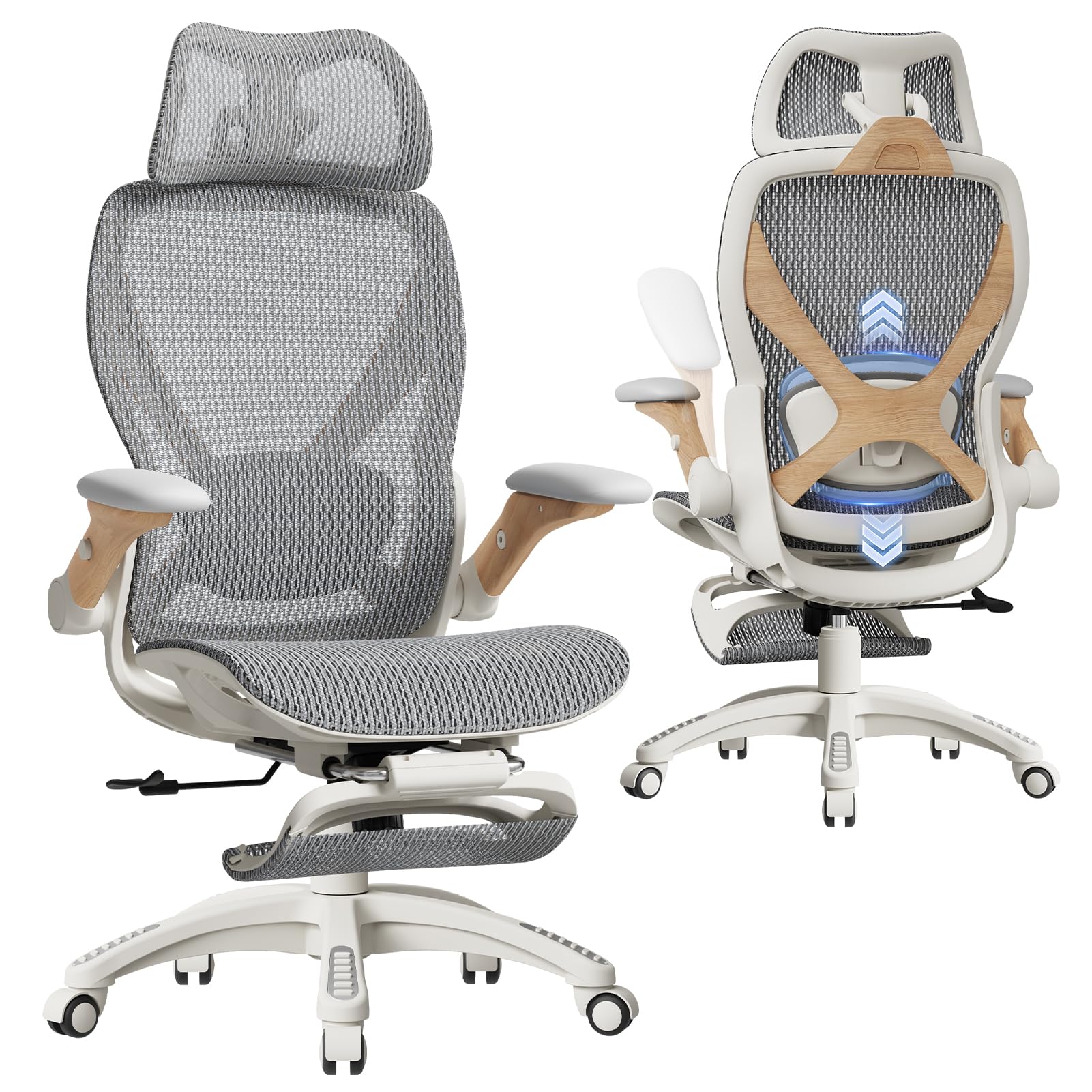
1,000+ ratings
Read Amazon ReviewsELABEST X100 Ergonomic Mesh Office Chair
A feature-rich choice for desk workers who want adjustable lumbar support, flip-up arms, recline, and an integrated footrest.
- Three-dimensional lumbar support adjusts 1.6 inches in depth, 2 inches in height, and 15 degrees in rotation, with a spring-loaded tracking design.
- Five-way flip-up armrests adjust for height, width, forward and backward position, and rotation; padded panels provide the arm contact surface.
- Three-stage reclining mechanism and an 18-inch extendable footrest with two angle positions support upright work and reclining breaks.
- Three-dimensional headrest measures 28 centimeters and is shaped to follow the cervical curve.

Pros
- Adjustable lumbar support offers several directions of fit, rather than relying on a single fixed position.
- Flip-up armrests can be moved for desk work or lifted when more clearance is useful.
Consider before buying
- The abundance of adjustments may take time to tune; buyers who prefer a simple chair with few controls may not use much of the feature set.
- The footrest and reclining design make this a more lounge-oriented choice than a straightforward task chair; consider whether those features suit your workspace and routine.
Read the full review summary
The X100 brings together several fit adjustments that shape how a chair feels over a long workday: lumbar support moves in three dimensions, the headrest is adjustable, and the armrests can shift in five ways or flip up.
Its ventilated mesh, reclining mechanism, and extendable footrest also let it serve as a desk chair and a place to lean back between tasks.
This setup will appeal to people who value flexibility and want a footrest built into the chair rather than a separate accessory.
The range of adjustments also gives buyers more ways to adapt the contact points to their desk and posture.
Before choosing it, check the 18.3–23-inch seat-height range against your desk and preferred sitting position, and confirm that the integrated footrest and reclining format fit your routine.
The buying factors
ELABEST X100 Scorecard
Editorial scores reflect listed features and buyer fit; they are not laboratory measurements or customer ratings.
Lumbar adjustability
The support adjusts in height, depth, and rotation, with a spring-loaded tracking design.
Armrest flexibility
Five-way adjustment plus a flip-up function offers several ways to position the arms or clear desk space.
Recline and footrest
A three-stage recline pairs with an extendable footrest that has two angle positions.
Head and neck positioning
The headrest adjusts in three dimensions and is described with a cervical-curve shape.
Breathable seating design
Dual-stripe mesh is designed for airflow and elasticity, though individual comfort depends on fit and preference.
Fit information
The seat-height range and 300-pound capacity are provided, but buyers should still check the chair's fit against their body and desk.
Setup and support
The chair is described as having tool-free assembly and a five-year warranty.
Key Features and Specifications of ELABEST X100
- Three-dimensional lumbar support adjusts 1.6 inches in depth, 2 inches in height, and 15 degrees in rotation, with a spring-loaded tracking design.
- Five-way flip-up armrests adjust for height, width, forward and backward position, and rotation; padded panels provide the arm contact surface.
- Three-stage reclining mechanism and an 18-inch extendable footrest with two angle positions support upright work and reclining breaks.
- Three-dimensional headrest measures 28 centimeters and is shaped to follow the cervical curve.
- Dual-stripe AirMesh is designed to increase airflow and elasticity compared with standard mesh.
- Seat height adjusts from 18.3 to 23 inches; the chair has a stated capacity of 300 pounds.
- The product description specifies BIFMA certification, a Grade-4 gas lift, a nylon base, and a five-year warranty.
Pros and Cons of ELABEST X100
Pros
- Adjustable lumbar support offers several directions of fit, rather than relying on a single fixed position.
- Flip-up armrests can be moved for desk work or lifted when more clearance is useful.
- An integrated footrest and multi-stage recline create a distinct option for leaning back during breaks.
- Adjustable headrest and ventilated mesh add useful contact-point and airflow considerations.
- The stated seat-height range and weight capacity help buyers compare basic fit requirements before purchase.
Consider before buying
- The abundance of adjustments may take time to tune; buyers who prefer a simple chair with few controls may not use much of the feature set.
- The footrest and reclining design make this a more lounge-oriented choice than a straightforward task chair; consider whether those features suit your workspace and routine.
- Seat height is only one part of fit. Check your desk height and the chair's overall dimensions before deciding, particularly if your setup has tight clearance.
Who Should Buy ELABEST X100?
Good fit
Consider the ELABEST X100 if you want a desk chair that can shift between focused sitting and reclining breaks without a separate footrest.
Its adjustable lumbar support, headrest, and five-way flip-up arms offer several ways to set up the parts that meet your back, neck, and arms.
It may also suit a shared or compact workspace where lifting the armrests could help the chair move closer to a desk.
Review the stated height range alongside your desk and leg position, and think about whether you will use the footrest often enough to value its integrated design.
The five-year warranty and tool-free assembly are practical ownership details in the product description.
Check the warranty terms and assembly instructions that apply to your purchase, and make sure the chair's dimensions work in the room where you plan to use it.
Who should skip it
Skip this model if you want a minimal task chair and do not expect to use reclining or a footrest; those features are a substantial part of its design.
If your desk or body fit depends on dimensions beyond the listed seat-height range, verify the full measurements before buying. The available fit details do not replace checking how the chair will work with your particular setup.
How the ELABEST X100 Fits a Workday
Lumbar support that can track movement
The lumbar assembly is designed to move in depth, height, and rotation, while its spring-loaded tracking mechanism is intended to respond as the sitter shifts. That gives buyers more scope to position support than a fixed lumbar pad.
Treat the adjustment range as a way to seek a comfortable contact point: no mechanism can guarantee the same fit for every back or posture.
Armrests for changing desk setups
The five-way arms can be positioned in several directions, and their flip-up function offers another option when moving close to a desk or making room beside the chair.
This flexibility is useful when desk height or activity changes through the day. Take time to position the pads so the arms rest comfortably without forcing the shoulders upward.
A work chair with a relaxation mode
The three-stage recline and extendable footrest are intended to make leaning back part of the chair's use, rather than an add-on arrangement.
The footrest has two angle positions, which gives buyers a limited but useful choice when extending it. Consider whether you have enough space for the footrest and whether your work habits include reclined breaks.
Fit, airflow, and everyday checks
The mesh is presented as a breathable, elastic design, and the adjustable headrest adds another way to tune upper-body contact. These features may matter during extended desk sessions, but comfort remains personal.
Compare the 18.3–23-inch seat-height range with your desk and leg position, and confirm the chair's footprint and weight capacity suit your room and needs.
Alternatives to ELABEST X100
Home Office Desk Chairs alternative
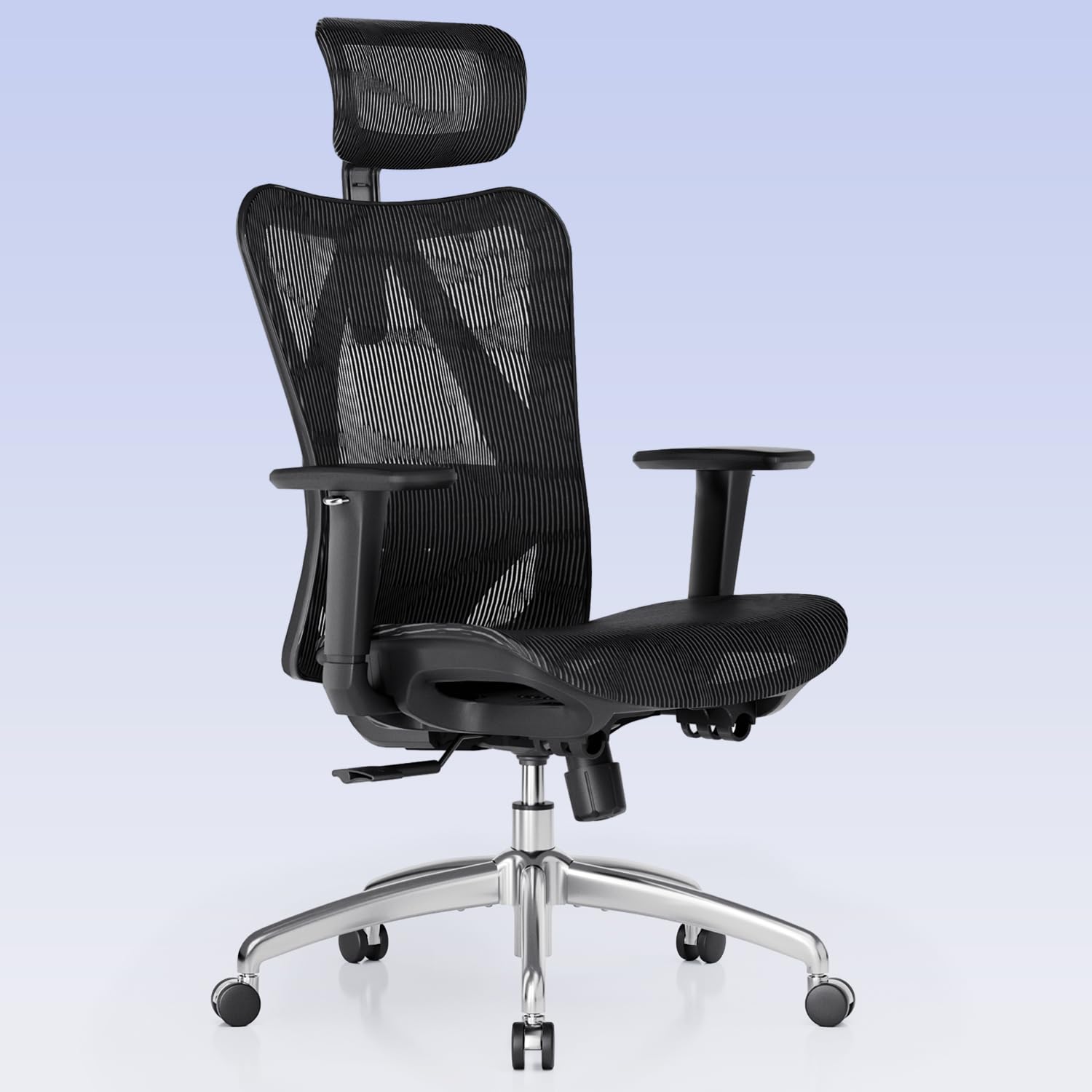
17,000+ ratings
Read Amazon ReviewsSIHOO M57 Ergonomic Mesh Office Chair
Choose the X100 if its integrated footrest and flip-up arms match your routine.
Consider the M57 if you prefer a chair whose listed recline range and adjustable support are the main priorities and you do not need a footrest.
- The SIHOO M57 description highlights a 90–126-degree recline, adjustable headrest and lumbar support, and three-dimensional armrests; it does not identify a footrest.
- The ELABEST X100 combines a three-dimensional lumbar support, five-way flip-up arms, and an integrated extendable footrest.
Home Office Desk Chairs alternative
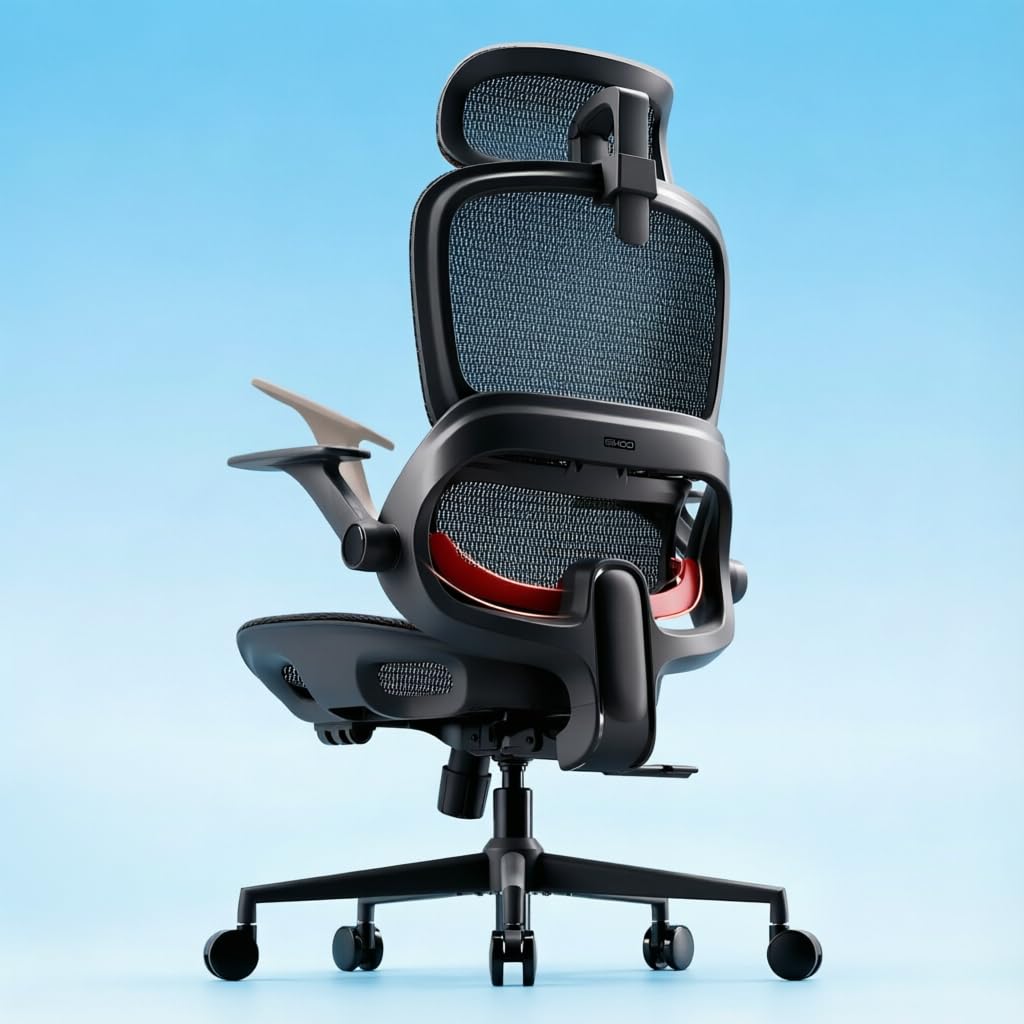
17,000+ ratings
Read Amazon ReviewsSIHOO B100 Office Chair
The X100 is the more relevant fit if you want the footrest included. The B100 is worth considering if you want a mesh chair with flip-up arms and adjustable recline but would rather not prioritize an integrated footrest.
- The SIHOO B100 offers three recline angles, a full-mesh design, a widened cushion, and flip-up armrests, with a stated 300-pound capacity.
- The ELABEST X100 has a three-stage reclining mechanism and a built-in footrest for reclining breaks.
Is ELABEST X100 Worth It?
The ELABEST X100 is worth considering if you want a highly adjustable mesh chair that can also serve for reclining breaks.
Its strongest differentiators are the moving lumbar support, five-way flip-up arms, and integrated footrest, backed by a stated five-year warranty.
Before buying, check the seat-height range and chair dimensions against your desk and available space, and decide whether the footrest and multiple adjustments fit your routine.
If those features are useful rather than extra complexity, the X100 presents a well-equipped option for a home office.
Your review at a glance
1,000+ ratings
Read Amazon ReviewsELABEST X100 Ergonomic Mesh Office Chair
A feature-rich choice for desk workers who want adjustable lumbar support, flip-up arms, recline, and an integrated footrest.
- Three-dimensional lumbar support adjusts 1.6 inches in depth, 2 inches in height, and 15 degrees in rotation, with a spring-loaded tracking design.
- Five-way flip-up armrests adjust for height, width, forward and backward position, and rotation; padded panels provide the arm contact surface.
- Three-stage reclining mechanism and an 18-inch extendable footrest with two angle positions support upright work and reclining breaks.
- Three-dimensional headrest measures 28 centimeters and is shaped to follow the cervical curve.